Water Directed Away from Foundations and Slopes
Drainage & Erosion in Pelzer for Properties with Runoff Problems and Soil Loss
Seasonal rainfall and freeze-thaw cycles in the Upstate create drainage challenges on properties where water pools near foundations, washes out access routes, or erodes slopes during storms. Drainage and erosion control from PSI Tree and Clearing addresses these issues as part of grading, excavation, and site-prep projects across Pelzer and the Anderson-Greenville County border. When properties experience standing water, gullies, or sediment movement, drainage solutions redirect runoff and stabilize soil before problems worsen.
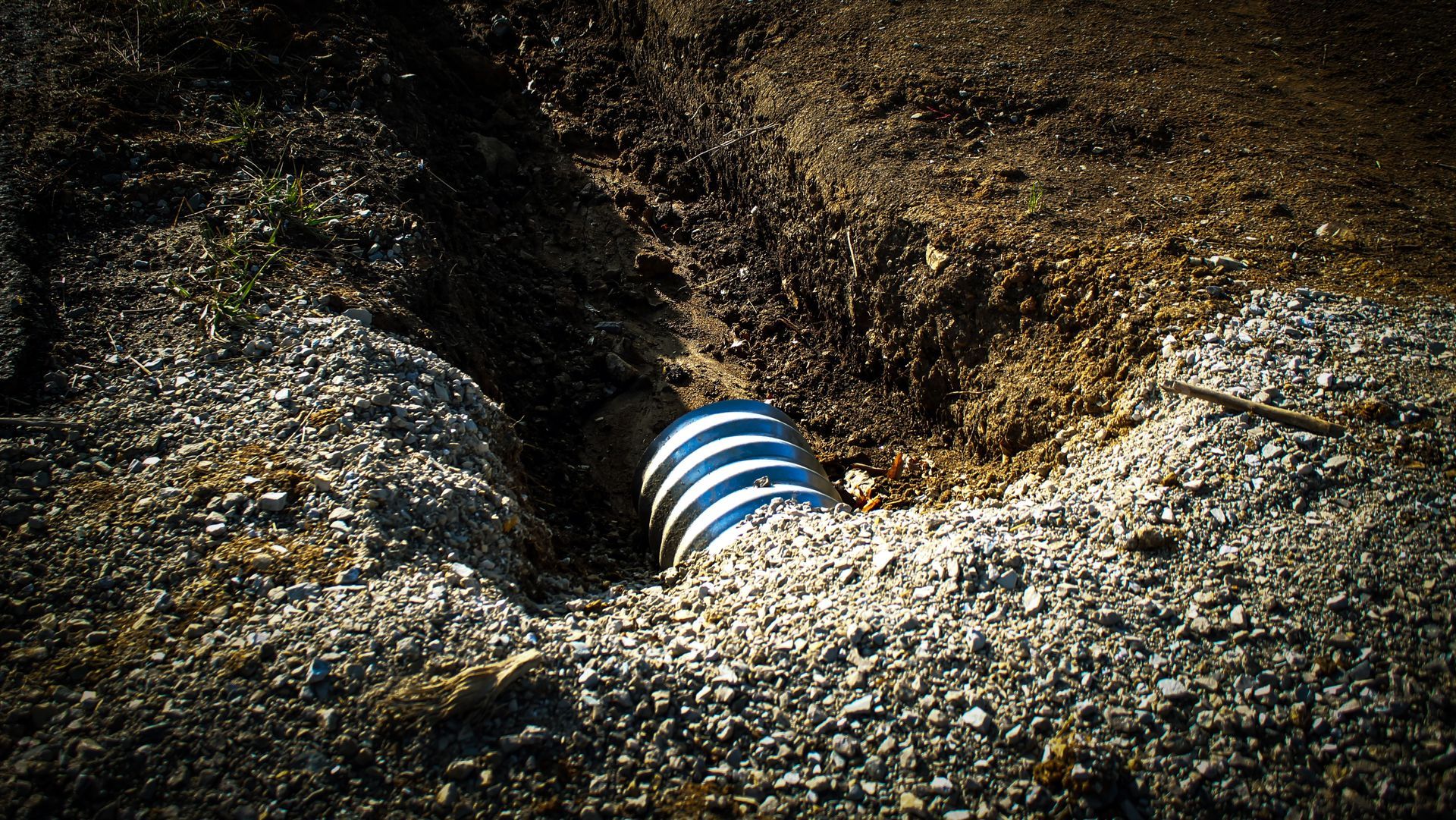
Drainage work involves shaping swales, installing culverts, grading slopes to control water flow, and applying erosion control measures such as mulch, rip-rap, or vegetation. For rural properties near Belton or Clemson, where natural drainage patterns may be disrupted by land clearing or construction, engineered solutions prevent water from undermining foundations, flooding low areas, or carrying topsoil off slopes. The approach integrates with overall site-prep workflows rather than functioning as emergency response to immediate flooding.
Request a site evaluation to identify drainage patterns, erosion risk areas, and soil conditions before designing control measures.
How Drainage and Erosion Control Prevent Long-Term Damage
Proper drainage design moves water away from structures, directs it toward safe discharge points, and prevents erosion by controlling flow velocity and volume. Swales and berms channel runoff along planned routes, culverts carry water under driveways or access roads, and surface grading ensures water does not pool where it causes settling or foundation damage. In Anderson County, where clay soil erodes quickly once vegetation is removed, these measures protect investment in site preparation and construction.
Once drainage and erosion control are in place, you see water flowing along designed channels during storms instead of pooling or cutting new gullies. Slopes remain stable without rills or sediment loss, and foundations stay dry because grading directs runoff away from building pads. Access routes maintain their shape rather than washing out, and replanted vegetation takes hold because soil stays in place long enough for roots to establish.
PSI Tree and Clearing ties drainage and erosion control to grading and excavation projects, using expertise in Upstate soil conditions to design solutions that account for seasonal rainfall patterns and freeze-thaw effects. Winter slowdowns affect scheduling, as wet ground complicates earthwork and cold temperatures limit options for certain erosion control materials. Subcontractor relationships support specialized installations when projects require advanced drainage engineering beyond standard site-prep grading.
What Property Owners Ask About Drainage and Erosion
Drainage and erosion control projects depend on site topography, soil type, and rainfall patterns, so understanding design options helps property owners plan effective solutions.
What causes erosion on cleared properties in the Upstate?
Removing vegetation exposes soil to raindrop impact and runoff, and clay-heavy soil erodes quickly without plant roots to hold it in place. Slopes and concentrated water flow accelerate erosion, creating gullies that worsen with each storm.
How do swales prevent water from pooling near buildings?
Swales are shallow channels graded to carry water away from structures and toward safe discharge points. Properly designed swales maintain gentle slopes that move water without eroding the channel itself, keeping foundations dry and preventing standing water.
When should erosion control be installed during site development?
Erosion control should follow grading and precede final landscaping, protecting exposed soil during construction when vegetation has not yet established. In Pelzer, where seasonal storms follow site clearing, early installation prevents sediment loss and grading rework.
What materials work best for erosion control on slopes?
Mulch, rip-rap, erosion blankets, and vegetation all stabilize slopes depending on steepness and water volume. Mulch works for gentle slopes with low flow, while rip-rap handles steeper grades and concentrated runoff that would wash away lighter materials.
How does drainage design account for future rainfall patterns?
Drainage systems are sized based on expected storm intensity and runoff volume, with culverts and swales designed to handle peak flows without overtopping. Upstate weather variability means designs accommodate both typical rain events and occasional heavy storms that exceed average precipitation.
PSI Tree and Clearing integrates drainage and erosion control with site-prep projects across Anderson, Greenville, and Spartanburg counties, applying grading expertise to water management challenges on residential and commercial properties. Call (864) 363-1348 to review drainage concerns, erosion risk, and site-prep timelines for your property.