Stumps Removed Without Damaging Surrounding Turf
Stump Grinding in Pelzer for Properties with Remnants from Tree Removal or Storm Damage
Tree stumps left after removal create tripping hazards, attract pests, and complicate mowing or construction plans. PSI Tree and Clearing handles stump grinding across Pelzer and the Anderson-Greenville County border for residential and commercial properties requiring complete site restoration. Grinding reduces stumps below ground level, eliminating visible obstacles and allowing turf, landscaping, or paving to proceed without working around remnants.
Stump grinding uses rotating teeth to chip wood and roots into mulch, working incrementally from the top down until the stump sits several inches below the soil surface. For properties with multiple stumps from storm cleanup or land clearing, grinding addresses each location without excavating root systems that extend beyond the visible trunk. This method avoids the soil disturbance and fill requirements that come with full extraction, particularly on residential lots where preserving existing grade matters.
Request an assessment to identify stump locations, diameter, and root spread for accurate grinding estimates.
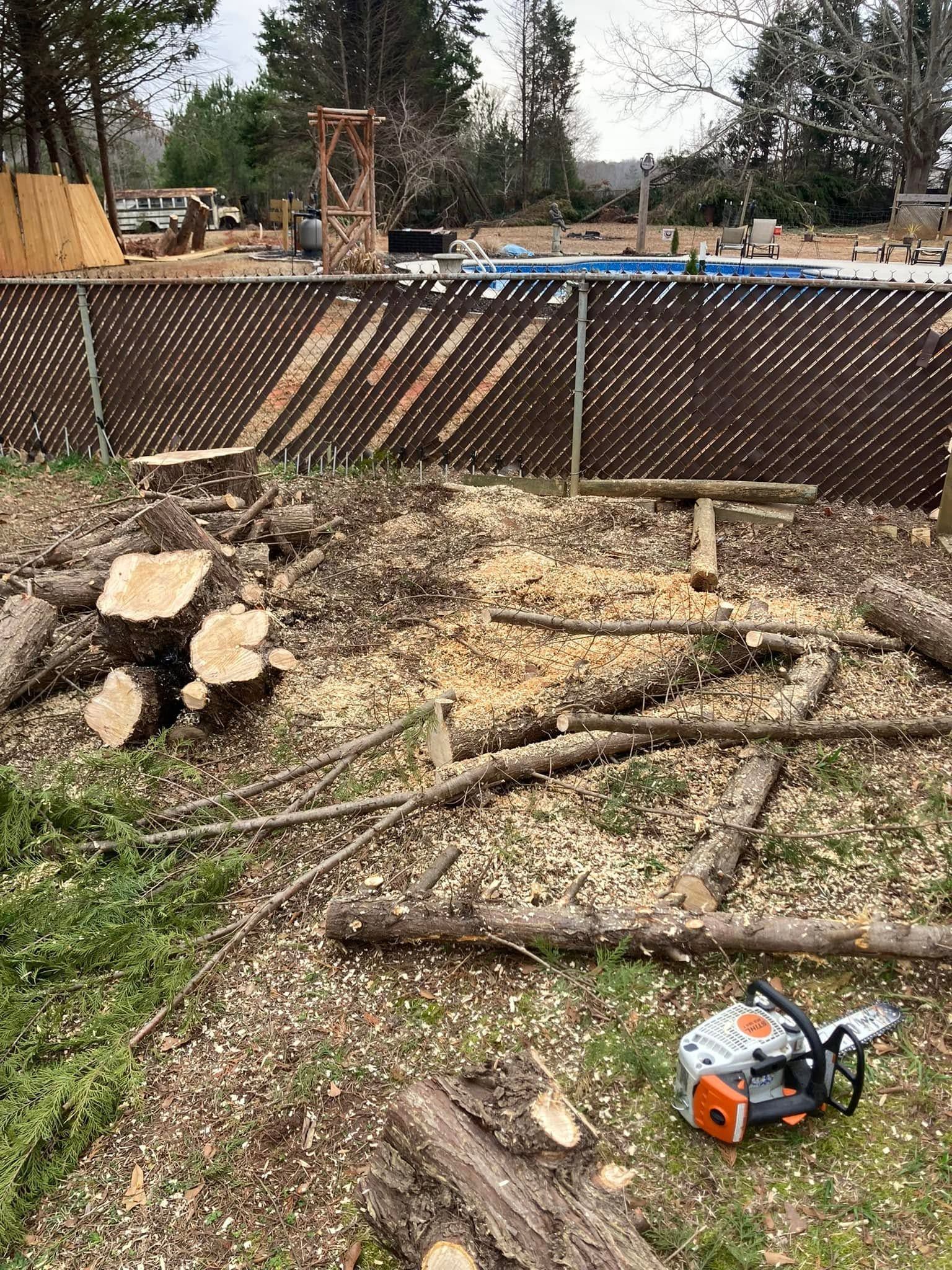
Why Stump Grinding Works for Site Restoration
Grinding removes the visible stump and grinds roots to a depth that prevents regrowth while leaving surrounding soil undisturbed. The process generates wood chips that fill the void left by the stump, creating a level surface that settles over time. For properties in Greenville and Anderson counties where tree removal precedes landscaping or construction, grinding ensures no remnants interfere with grading, planting, or foundation work.
After grinding, the area appears level with surrounding turf, and the wood chips decompose into the soil or get removed depending on project needs. You no longer navigate around stumps when mowing, and new plantings or hardscaping proceed without obstacles. On commercial sites, grinding clears the way for parking, drainage work, or building pads without the delays that come from coordinating excavation equipment for full stump removal.
PSI Tree and Clearing uses equipment rental for larger stumps or jobs requiring extended grinding time, ensuring access to machinery that matches stump size and site conditions. For residential properties near Belton or Clemson, smaller stumps from ornamental trees require less equipment time than commercial sites with multiple large hardwood stumps. Grinding depth adjusts based on whether the area will support turf, pavement, or structures, with deeper grinding needed for construction than for replanting grass.
Common Stump Grinding Questions Answered
Stump grinding logistics vary by stump size, location, and site access, so property owners benefit from understanding the process before scheduling work.
How deep does stump grinding go below the surface?
Grinding typically reaches six to twelve inches below grade, depending on intended land use. Turf restoration requires less depth than construction, where stumps must sit low enough to avoid interfering with footings or utilities.
What happens to the wood chips after grinding?
Chips remain on site as fill unless you request removal. They decompose over months, enriching soil if left in place, or can be spread as mulch in landscape beds if volume exceeds what the stump void requires.
How soon after tree removal can stumps be ground?
Grinding can proceed immediately after tree removal, though waiting a few weeks allows fresh stumps to dry slightly, which speeds the grinding process. For properties in Pelzer with multiple stumps, scheduling grinding alongside tree removal reduces total project time.
What access does grinding equipment require?
Grinders need clearance through gates, around structures, and across turf without damaging irrigation or utilities. Equipment size varies, so site access influences which machinery gets used and how close to buildings or fences grinding can occur.
Why do some stumps cost more to grind than others?
Diameter, wood hardness, root spread, and site access all affect grinding time. Large oak or hickory stumps require more passes than softer pine stumps, and locations near structures or utilities slow the process compared to open-field stumps.
PSI Tree and Clearing evaluates stump conditions during site visits to provide accurate timelines and determine whether equipment rental or subcontractor coordination fits the project scope. Arrange a consultation by calling (864) 363-1348 to review stump size, site access, and restoration goals for your property.