Hazardous Trees Don't Wait for Convenience
Tree Removal in Pelzer for storm-damaged and dead trees threatening structures
PSI Tree and Clearing removes hazardous, dead, and unwanted trees across Pelzer and Anderson County, operating with 24/7 emergency availability when ice damage or summer storms bring trees down without warning. Winter ice accumulation in the Upstate causes branch failures and trunk splits that turn mature trees into immediate threats to homes, power lines, and vehicles. You notice the danger when a tree leans after a storm, when large deadwood hangs over your roof, or when root plates lift visibly from saturated ground.
The removal process involves full extraction from the property, stump assessment to determine whether grinding is needed immediately or can wait, and complete debris hauling so no cleanup falls to you after the tree is down. For larger jobs requiring specialized equipment, PSI coordinates equipment rental to handle trees that exceed standard rigging capacity, ensuring safe removal regardless of size or position.
Schedule a property evaluation to identify trees that pose structural risks before the next weather event..
What Full Extraction Means for Your Property
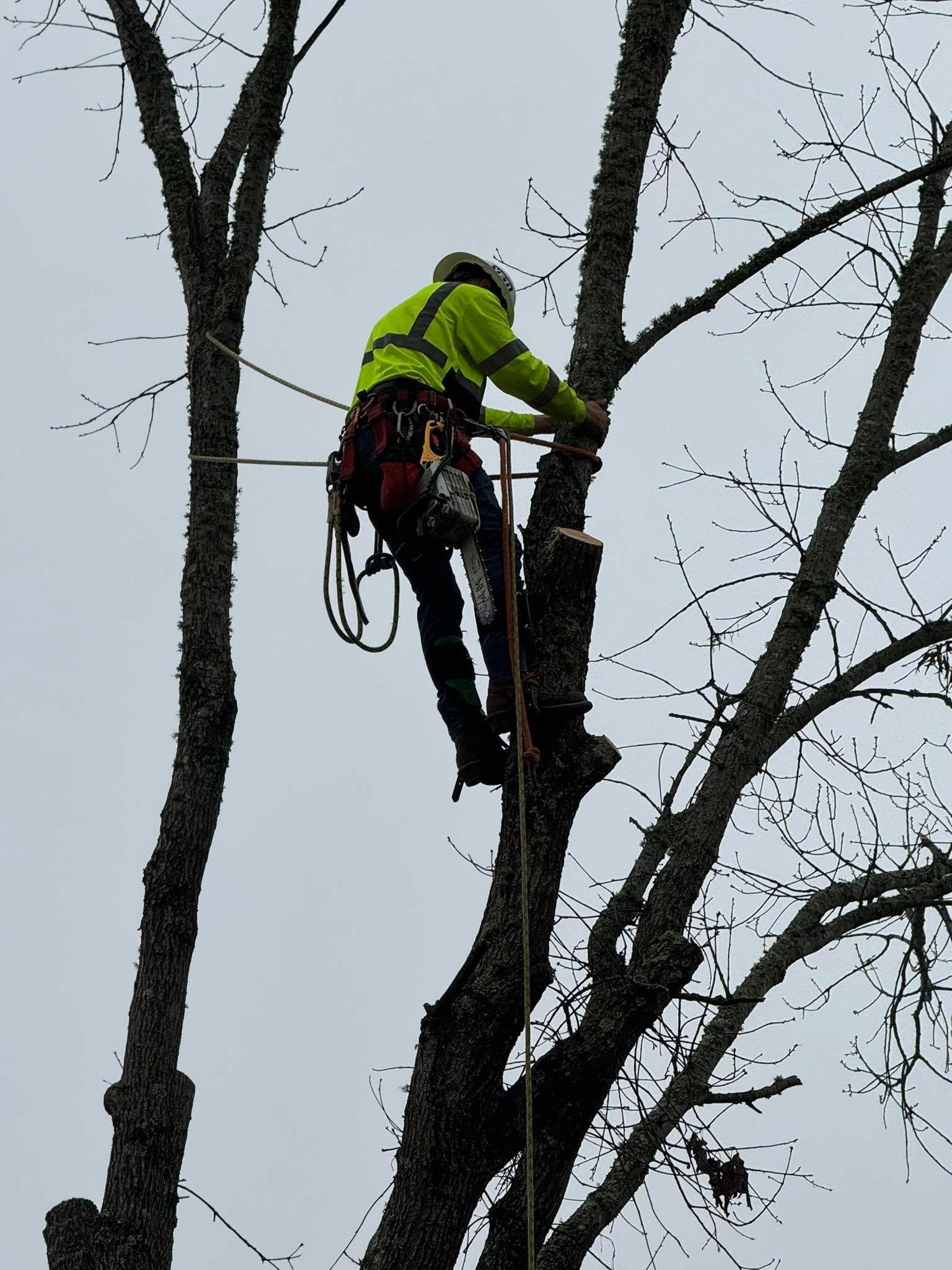
Tree removal requires more than cutting and dropping—the work includes rigging sections down in controlled drops when trees stand near structures, dismantling from the top down when clearance is limited, and assessing stump conditions to determine whether immediate grinding prevents regrowth or pest attraction. PSI handles one removal job per week on average, with emergency callouts at any hour when storms create urgent hazards.
Once the tree is removed, you no longer see the lean threatening your roofline, the deadwood that drops branches during wind, or the root heave that cracks your driveway as the tree destabilizes. The site is cleared of all debris, leaving you with open space ready for replanting, construction, or simply safer yard use without the constant monitoring that a failing tree demands.
The service includes hauling all wood and brush off-site, but stump grinding is assessed separately based on diameter, root spread, and whether the stump location interferes with future landscaping or construction plans. Some property owners leave stumps in place when they're located in wooded edges or areas where regrowth isn't a concern..
What Property Owners Ask Before Removing Trees
Questions about tree removal often focus on timing, safety during the work, and what happens to the wood and debris after the tree comes down.
What makes a tree hazardous enough to require removal?
Dead trees with hollow trunks, trees leaning more than 15 degrees toward structures, and trees with visible root plate lifting after storms all qualify as hazards that shouldn't wait for the next wind event to worsen.
How does removal work when the tree is close to my house?
Climbers dismantle the tree from the top down in sections, rigging each piece with ropes to control the drop and prevent impact damage to structures, fences, or landscaping below.
What happens during an emergency callout in Pelzer?
PSI responds at any hour, including pre-dawn calls at 5 AM when storms hit overnight, to remove trees blocking roads, resting on roofs, or creating immediate safety hazards that can't wait for business hours.
Does the service include stump removal?
Stump assessment is part of every removal job, and grinding can be scheduled immediately or later depending on whether the stump location interferes with your plans for the space.
How much debris is left after the tree is removed?
None—all wood, branches, and brush are hauled off-site as part of the removal service, leaving the area clear and ready for whatever comes next.
PSI Tree and Clearing operates across Anderson County with equipment and availability to handle removals when you need them, not just when the schedule allows. Request an on-site assessment to evaluate specific trees and determine removal priority based on actual risk.