Land Cleared Without Hauling or Burning
Forestry Mulching in Pelzer for Properties Requiring Vegetation Removal and Erosion Prevention
PSI Tree and Clearing provides forestry mulching services in Pelzer and throughout Anderson County for properties requiring land reclamation, erosion control, and vegetation management. When overgrown lots, commercial sites, or residential acreage need clearing without the cost and time of hauling debris offsite, forestry mulching grinds trees, brush, and undergrowth into organic material that remains on the ground. This approach works for development projects, site preparation, and land restoration where soil stability matters as much as clearing the surface.
The mulching process uses specialized equipment to grind standing vegetation into chips that settle across the soil, reducing erosion and preparing the site for construction or planting. In the Upstate, where seasonal rainfall and sloped terrain create runoff challenges, the mulch layer acts as immediate ground cover until permanent vegetation or structures replace it. For commercial sites across Spartanburg and Anderson County, this method eliminates burn permits, reduces trucking costs, and speeds project timelines compared to traditional clearing.
Schedule a site evaluation to assess vegetation density and determine the most efficient mulching approach for your property.
What Forestry Mulching Accomplishes on Cleared Land
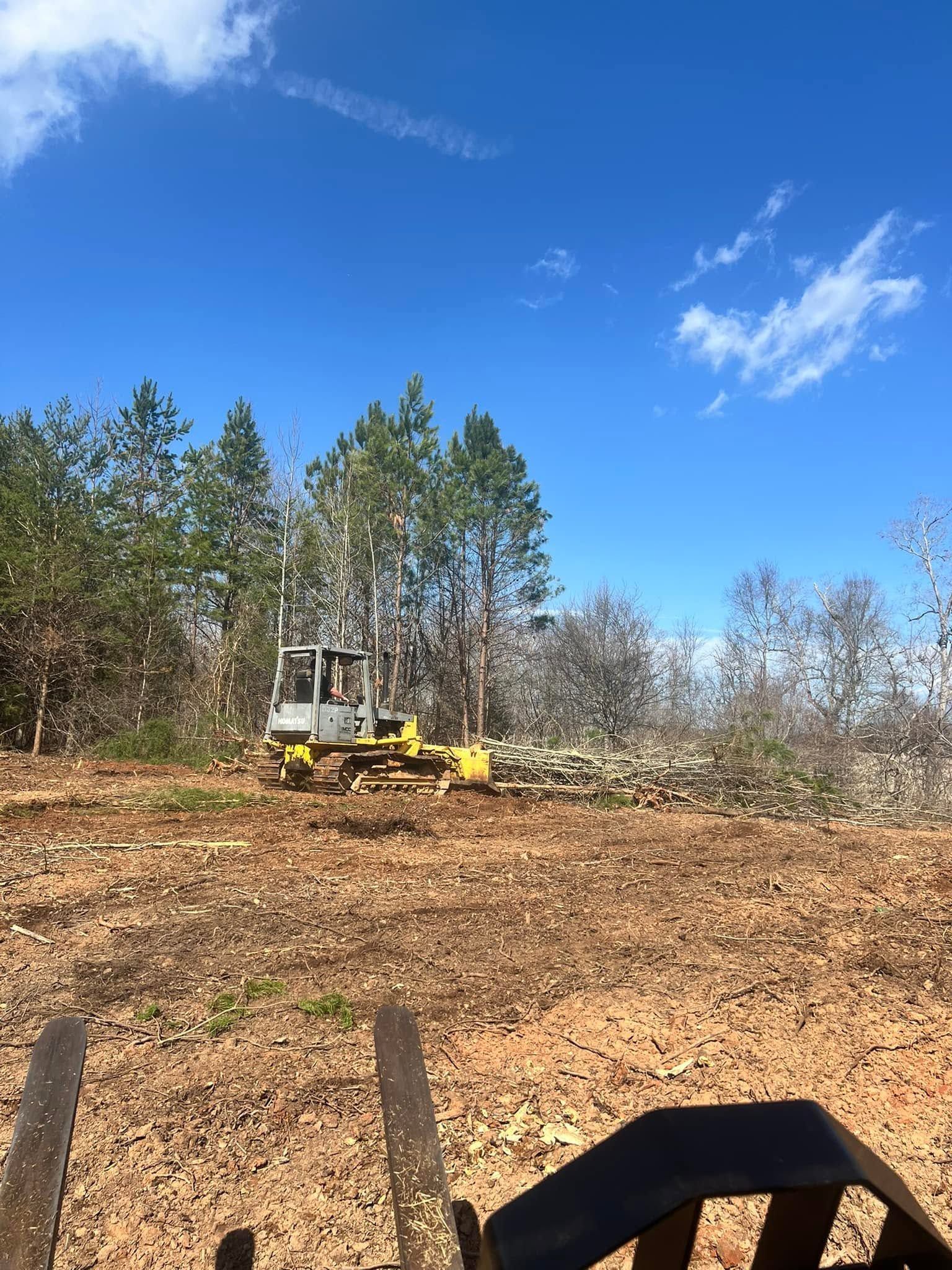
Forestry mulching clears acres of brush, saplings, and small trees while leaving root systems intact below the surface. The equipment grinds everything above ground into uniform chips that distribute evenly, creating a stable layer that holds moisture and prevents soil from washing away during storms. This matters in the Upstate, where development pressure meets hilly topography and properties often sit on slopes that erode quickly once vegetation is removed.
After mulching, you see cleared sightlines, level ground cover, and immediate erosion protection without bare soil exposure. The mulch layer decomposes slowly, enriching soil as it breaks down and reducing the need for additional amendments before planting or construction. Properties prepared this way avoid the dust, mud, and rutting that follow traditional dozing and hauling, particularly during wet months when equipment tears up unprotected ground.
PSI Tree and Clearing handles both commercial-scale projects and residential acreage through equipment rental partnerships for larger jobs and subcontractor coordination for smaller parcels. The approach adjusts to project size, with commercial land reclamation in Spartanburg requiring different logistics than residential lot clearing near Belton. Equipment access, debris density, and timeline all influence how the work is structured, but the outcome remains consistent: cleared land with organic ground cover in place.
Questions Property Owners Ask Before Mulching
Forestry mulching projects vary based on vegetation type, acreage, and intended land use, so understanding the process helps property owners plan for site preparation and erosion control.
What vegetation types work best for forestry mulching?
Forestry mulching handles brush, saplings, small trees, and undergrowth effectively, grinding everything into chips that remain on the ground. Larger hardwoods or stumps may require separate removal depending on diameter and root structure.
How does mulching prevent erosion compared to traditional clearing?
The mulch layer covers soil immediately after clearing, reducing raindrop impact and slowing water movement across slopes. In Anderson County, where seasonal storms follow land clearing, this protection prevents gullies and sediment loss that delay construction schedules.
What happens to the mulch after it is applied?
The organic material decomposes gradually, enriching soil and supporting vegetation growth if replanting is planned. For construction sites, the mulch compacts under equipment and stabilizes access routes better than bare soil.
When should mulching be scheduled for site preparation?
Scheduling depends on project timelines and weather, but mulching can proceed in most conditions since the equipment distributes weight and avoids the rutting common with dozing. Dry months reduce mud, but the mulch layer itself protects against erosion even during wet periods.
What is included in a forestry mulching estimate?
Estimates account for acreage, vegetation density, equipment access, and disposal requirements if stumps or large trees exceed mulching capacity. PSI Tree and Clearing evaluates each site to determine whether rental equipment or subcontractor coordination offers the most efficient approach.
PSI Tree and Clearing has managed commercial-scale mulching projects across the Spartanburg area and residential land reclamation throughout Anderson County, with equipment partnerships that adjust to project scope. Contact PSI Tree and Clearing at (864) 363-1348 to arrange a site visit and review vegetation conditions, slope considerations, and timeline requirements for your property.